
Laproscopy Treatment in Vellore
Best
Laproscopy
care in Vellore.
Compassionate support, careful evaluation and personalised medical care for patients and families navigating their cancer care journey.
Together,
every step matters.
About Laproscopy
Advanced Surgical Care Through Smaller Incisions
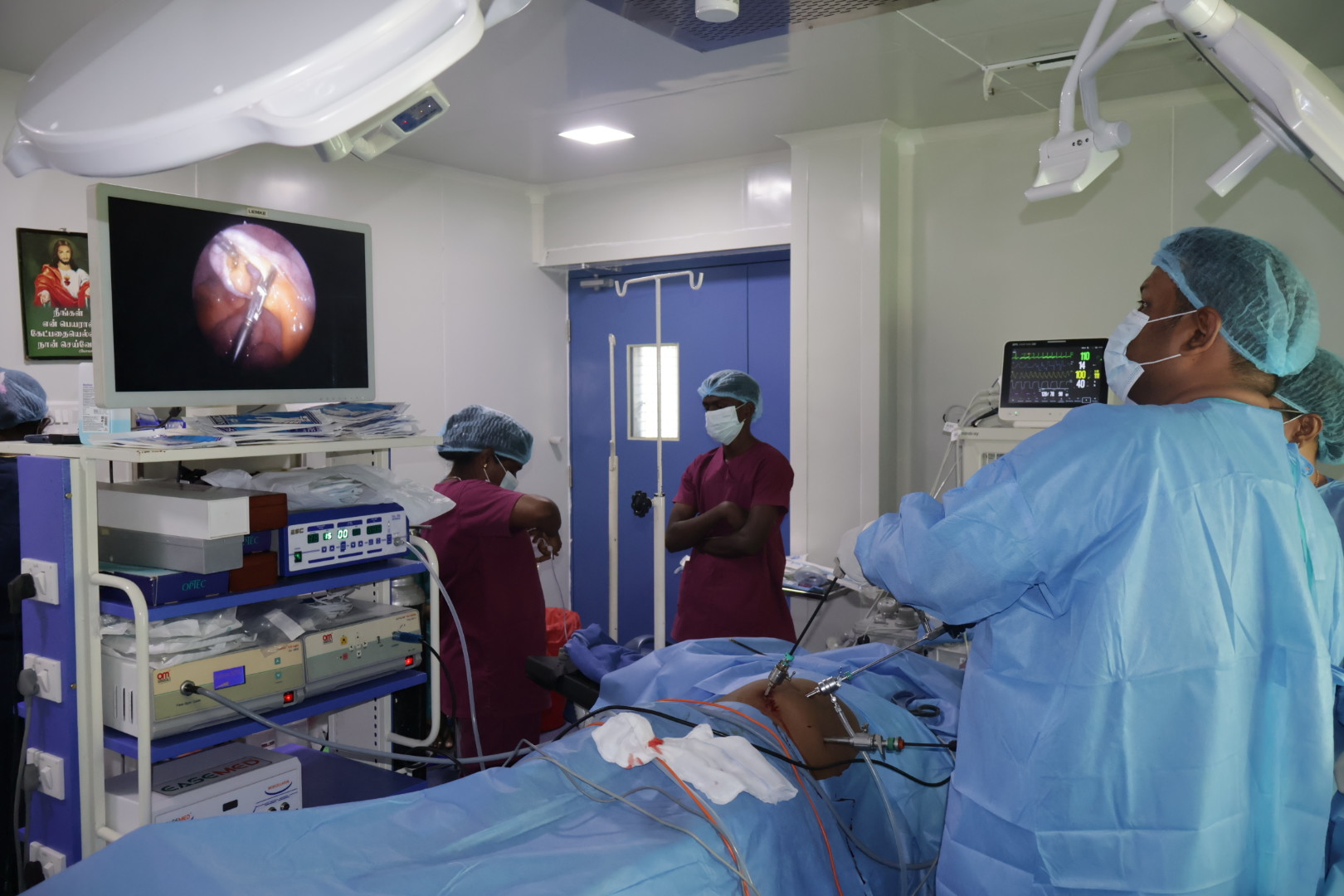
Laparoscopy is a minimally invasive surgical technique that allows doctors to examine and treat conditions inside the abdomen or pelvis through small incisions. Instead of making one large incision, the surgeon uses a thin camera called a laparoscope along with specialised surgical instruments.
At Saint Mary’s Hospital, Katpadi, Vellore, laparoscopy is used for selected surgical and gynaecological procedures based on the patient’s condition and medical requirements. The approach may be considered for conditions such as hernia, appendix problems, gallstones, ovarian cysts and other conditions requiring surgical treatment.
A laparoscopic procedure begins with a detailed consultation and evaluation. The doctor assesses the patient’s symptoms, medical history and investigation results before determining whether laparoscopic surgery is appropriate.
Our focus is not simply on the procedure itself, but on providing a carefully planned treatment journey — from evaluation and preparation to surgery and postoperative follow-up.
Our Treatment Procedure
From Consultation to Recovery
Every patient’s treatment plan is different. Depending on the condition and procedure required, the general laparoscopic treatment journey may include:
01 – Consultation & Evaluation
The doctor understands your symptoms, medical history and previous treatments before recommending further evaluation.
02 – Diagnostic Assessment
Relevant investigations or imaging may be advised to understand the condition and determine the appropriate surgical approach.
03 – Treatment Planning
The surgeon discusses the diagnosis, available treatment options, expected recovery and preparation required before surgery.
04 – Laparoscopic Procedure
When laparoscopic surgery is considered suitable, the procedure is performed through small incisions using a camera and specialised instruments.
05 – Postoperative Care
After the procedure, the medical team monitors your recovery and provides instructions regarding medicines, activity, diet and follow-up.
06 – Follow-up
Follow-up appointments help the doctor assess healing and recovery and address any concerns after the procedure.
Important: The exact procedure, hospital stay, recovery period and postoperative instructions depend on the individual patient and type of surgery.
Expert Laproscopy Care at Saint Mary
Experienced Hands. Personalised Surgical Care.
Laparoscopic treatment requires careful evaluation, appropriate surgical planning and close postoperative monitoring.
At Saint Mary’s Hospital, patients are evaluated by our medical team based on their individual condition before surgery is recommended. Our approach focuses on understanding the patient’s concerns, explaining the available treatment options clearly and choosing an appropriate surgical approach.
Our Surgical Expertise Includes
- Laparoscopic surgery
- Hernia surgery
- Appendix-related surgery
- Gallstone-related surgery
- Gynaecological laparoscopic procedures
- Ovarian cyst-related procedures
- Other selected laparoscopic procedures
Looking for laparoscopic treatment in Vellore?
Speak with our medical team to understand whether laparoscopic surgery is suitable for your condition.
About Laproscopy
Thoughtful Surgical Care, From Consultation to Recovery
Choosing surgery is an important decision. At Saint Mary’s Hospital, our approach is centred around understanding each patient’s condition and providing appropriate medical guidance throughout the treatment journey.
Patient-Centred Evaluation
We begin by understanding your symptoms, medical history and individual healthcare needs before planning treatment.
Laparoscopic Surgical Care
Laparoscopy is available for selected surgical and gynaecological conditions where the approach is clinically appropriate.
Multiple Surgical Services
From hernia and appendix conditions to gallstones and selected gynaecological conditions, our hospital provides care for a range of surgical needs.
Complete Care Under One Roof
Consultation, investigations, surgical care and postoperative follow-up can be coordinated within the hospital according to the patient’s treatment requirements.
Clear Treatment Guidance
Our doctors explain the condition, recommended treatment and relevant preparation and recovery considerations so patients and families can make informed decisions.
Conveniently Located in Katpadi
Saint Mary’s Hospital is located in Katpadi, making it accessible for patients seeking surgical and laparoscopic care in Vellore.
Laparoscopic Surgery
Laparoscopic surgery is a minimally invasive surgical approach used to diagnose or treat certain conditions through small incisions. A thin camera, called a laparoscope, allows the surgeon to view the area being treated, while specialised instruments are used to perform the procedure. At Saint Mary’s Hospital, laparoscopic surgery may be considered for selected abdominal and gynaecological conditions after detailed medical evaluation. The suitability of this approach depends on the patient’s condition, medical history and the type of surgery required. Our medical team focuses on careful assessment, appropriate treatment planning and postoperative care to support patients throughout their surgical journey.
Hernia Surgery
A hernia occurs when an internal organ or tissue pushes through a weakened area of the surrounding muscle or tissue. Depending on the type, size and location of the hernia, laparoscopic surgery may be considered as a treatment option. During laparoscopic hernia surgery, specialised instruments and a camera are introduced through small incisions to repair the weakened area. The surgeon determines the most appropriate technique after assessing the patient’s symptoms and medical condition. At Saint Mary’s Hospital, patients receive individualised evaluation and guidance before treatment, with appropriate postoperative instructions and follow-up to support recovery.
Appendix-Related Surgery
Appendix-related conditions, particularly appendicitis, may require surgical treatment when recommended by a doctor. Laparoscopic appendectomy is a minimally invasive procedure in which the appendix is removed using a camera and specialised surgical instruments introduced through small incisions. Whether laparoscopic surgery is appropriate depends on factors such as the patient’s condition, severity of the problem and overall health. At Saint Mary’s Hospital, patients presenting with suspected appendix-related problems are evaluated carefully before treatment is planned. Our medical team provides guidance throughout the process, from assessment and surgical preparation to postoperative monitoring and follow-up.
Gallstone-Related Surgery
Gallstones are hardened deposits that can develop inside the gallbladder and may sometimes cause pain, inflammation or other complications. When surgery is recommended, laparoscopic gallbladder surgery, commonly known as laparoscopic cholecystectomy, may be considered. The procedure uses a camera and specialised instruments inserted through small incisions to remove the gallbladder. The appropriate treatment depends on the patient’s symptoms, investigations and overall medical condition. At Saint Mary’s Hospital, patients with gallstone-related problems undergo medical evaluation before a treatment plan is recommended. Our team also provides guidance regarding preparation, postoperative care and follow-up after surgery.
Gynaecological Laparoscopic Procedures
Gynaecological laparoscopy is a minimally invasive surgical approach used for evaluating or treating selected conditions affecting the female reproductive system. Depending on the diagnosis, laparoscopic procedures may be considered for conditions involving the ovaries, uterus, fallopian tubes or surrounding pelvic structures. The procedure uses a small camera and specialised instruments introduced through small incisions. At Saint Mary’s Hospital, the need for gynaecological laparoscopy is determined after consultation and appropriate investigations. Our medical team explains the recommended procedure, possible treatment options and recovery considerations so that patients can make informed decisions about their women’s healthcare.
Other Selected Laparoscopic Procedures
Laparoscopic techniques may also be used for other selected surgical conditions when the approach is considered clinically appropriate. The exact procedure depends on the diagnosis, location of the condition, patient’s overall health and the surgeon’s assessment. Before recommending surgery, the medical team reviews relevant symptoms, medical history and investigation results. At Saint Mary’s Hospital, patients are guided through the treatment process with an emphasis on appropriate evaluation and personalised surgical planning. If laparoscopic treatment is suitable, the team explains the procedure, preparation, expected recovery and postoperative follow-up based on the individual patient’s requirements.
Advanced Laparoscopic and Gynaecological Procedures in Vellore
Laparoscopic Hysterectomy
Laparoscopic hysterectomy is a minimally invasive surgical procedure to remove the uterus using specialised instruments inserted through small abdominal incisions. It may be recommended for certain conditions, such as uterine fibroids, persistent heavy menstrual bleeding, adenomyosis, or other uterine disorders when surgery is appropriate. The procedure may offer benefits such as smaller incisions and a potentially shorter recovery period compared with open surgery. The most suitable surgical approach depends on the patient’s condition and medical assessment.
Laparoscopic Myomectomy
Laparoscopic myomectomy is a surgical procedure performed to remove uterine fibroids while preserving the uterus. Fibroids are non-cancerous growths that may cause heavy periods, pelvic discomfort, pressure symptoms, or fertility-related concerns in some women. Using small incisions and specialised instruments, the surgeon removes selected fibroids based on their size, number, and location. This procedure may be considered for women who wish to preserve their uterus, including some who plan to have children in the future.
Laparoscopic Ovarian Cystectomy
Laparoscopic ovarian cystectomy is a minimally invasive procedure to remove an ovarian cyst while preserving as much healthy ovarian tissue as possible, when feasible. Ovarian cysts may develop for different reasons, and many do not require surgery. However, surgery may be considered when a cyst causes persistent symptoms, grows in size, or has features that require further evaluation. The treatment approach is determined by assessing the cyst’s characteristics, the patient’s age, symptoms, and reproductive goals.
Laparoscopic Endometriosis Surgery
Laparoscopic endometriosis surgery is used to identify and treat endometriosis, a condition in which tissue similar to the lining of the uterus grows outside it. Endometriosis may be associated with painful periods, chronic pelvic pain, discomfort during intercourse, or fertility difficulties. During surgery, the surgeon may remove or treat endometriosis lesions and adhesions, depending on their location and extent. The treatment plan is individualised, considering symptom severity, previous treatments, and whether the patient wishes to conceive.
Hysteroscopy
Hysteroscopy is a procedure that allows a gynaecologist to examine the inside of the uterus using a thin, lighted instrument called a hysteroscope. It is commonly used to investigate abnormal uterine bleeding and may help identify conditions such as uterine polyps, selected fibroids, or abnormalities within the uterine cavity. Operative hysteroscopy can also be used to treat certain conditions during the same procedure. The need for anaesthesia and the expected recovery depend on whether the procedure is diagnostic or operative.
Laparoscopy for Tubal Obstruction
Laparoscopy may be used to investigate selected cases of fallopian tube obstruction, which can affect the ability to conceive naturally. The procedure allows the surgeon to examine the pelvic organs and assess possible causes of blockage, such as adhesions or endometriosis. In appropriate cases, treatment may be performed to address certain abnormalities or improve tubal function. The suitability of surgery depends on the location and severity of the obstruction, the condition of the fallopian tubes, and the patient’s fertility goals. Other fertility treatment options may also be discussed based on the findings.