
Hysteroscopy Treatment in Vellore
No.1 Hysteroscopy
care
in Vellore.
Compassionate support, careful evaluation and personalised medical care for patients and families navigating their cancer care journey.
Together,
every step matters.
About Hysteroscopy
A Closer Look. A Clearer Understanding.
Hysteroscopy for Precise Evaluation of the Uterus
A hysteroscopy is a minimally invasive procedure that allows a gynaecologist to examine the inside of the uterus using a thin instrument with a camera. It can help investigate certain symptoms and identify abnormalities within the uterine cavity.
At Saint Mary’s Hospital, hysteroscopy can form part of a personalised gynaecological evaluation when your doctor feels that a closer examination of the uterus may be helpful.
Understanding Hysteroscopy
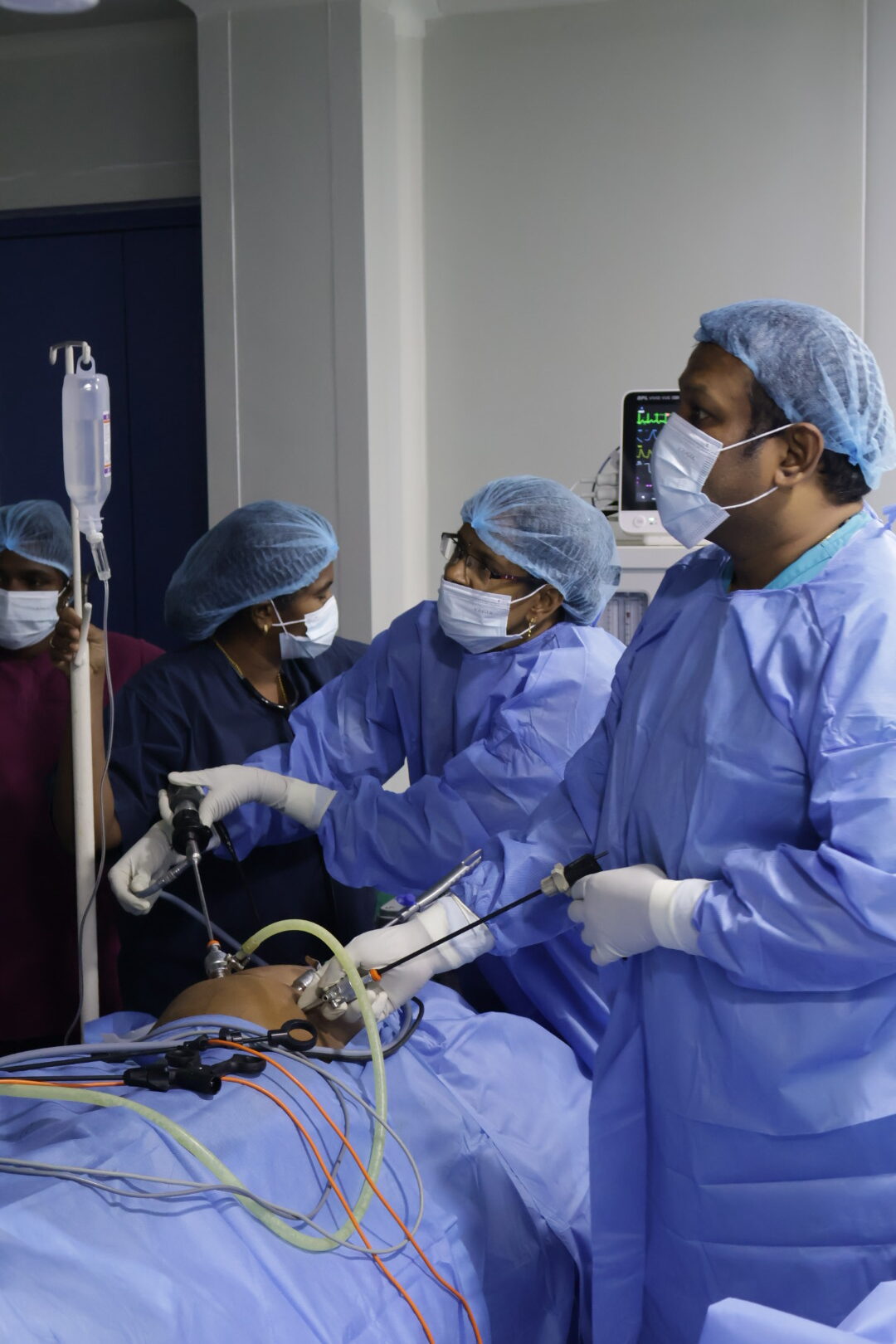
Hysteroscopy is a procedure used to look directly inside the uterus, or womb. A thin hysteroscope with a small camera is gently passed through the vagina and cervix into the uterus, allowing the doctor to view the uterine cavity on a monitor.
Unlike procedures that require an abdominal incision, hysteroscopy provides access to the uterine cavity through the natural vaginal and cervical passage.
Depending on the reason for the procedure, hysteroscopy may be used to investigate abnormal bleeding, examine the uterine lining, take a small tissue sample, or treat certain abnormalities such as polyps or selected fibroids.
A closer look can provide a clearer diagnosis.
The purpose of hysteroscopy is not simply to examine the uterus. It can help your doctor understand what may be causing particular symptoms or concerns and decide what treatment, if any, is appropriate.
Our Treatment Procedure
When May Hysteroscopy Be Recommended?
Your doctor may recommend hysteroscopy when a closer examination of the inside of the uterus is needed.
It may be considered for:
01 — Heavy or Abnormal Bleeding
To investigate unusually heavy, prolonged or irregular menstrual bleeding.
02 — Bleeding Between Periods
To help identify abnormalities that may be contributing to unexpected bleeding.
03 — Uterine Polyps
To identify and, when appropriate, remove certain polyps within the uterine cavity.
04 — Fibroids
To assess selected fibroids that extend into or affect the uterine cavity.
05 — Fertility Concerns
Hysteroscopy may form part of an evaluation when there are concerns involving the uterine cavity or difficulty conceiving.
06 — Repeated Miscarriages
In selected cases, examining the uterine cavity may help identify structural abnormalities.
07 — Abnormalities Seen on Imaging
If an ultrasound or other investigation suggests an abnormality inside the uterus, hysteroscopy may provide a more direct assessment.
These are general reasons for considering hysteroscopy; whether it is appropriate depends on the individual’s symptoms and clinical evaluation.
What Happens During Hysteroscopy?
The exact process depends on the type of hysteroscopy and the reason it has been recommended.
Consultation & Preparation
Your doctor will explain why hysteroscopy has been recommended, what the procedure involves and the available pain-relief or anaesthesia options.
Examination
A thin hysteroscope containing a camera is gently passed through the vagina and cervix into the uterus. Fluid may be introduced to help the doctor see the uterine cavity clearly.
Direct Visualisation
The camera allows the doctor to examine the uterine cavity and its lining on a monitor.
Biopsy When Required
If clinically appropriate, a small sample of tissue may be taken for laboratory examination.
Treatment When Appropriate
Certain abnormalities, such as selected polyps or fibroids, may sometimes be treated or removed during hysteroscopy.
Recovery
Recovery depends on the type of procedure and whether any additional treatment was performed. Some patients may experience period-like cramps or light bleeding afterwards.
Expert Hysteroscopy Care at Saint Mary
Experienced Hands. Personalised Surgical Care.
Laparoscopic treatment requires careful evaluation, appropriate surgical planning and close postoperative monitoring.
At Saint Mary’s Hospital, patients are evaluated by our medical team based on their individual condition before surgery is recommended. Our approach focuses on understanding the patient’s concerns, explaining the available treatment options clearly and choosing an appropriate surgical approach.
Our Surgical Expertise Includes
- Laparoscopic surgery
- Hernia surgery
- Appendix-related surgery
- Gallstone-related surgery
- Gynaecological laparoscopic procedures
- Ovarian cyst-related procedures
- Other selected laparoscopic procedures
Looking for laparoscopic treatment in Vellore?
Speak with our medical team to understand whether laparoscopic surgery is suitable for your condition.
About Hysteroscopy
Care That Begins With Understanding.
At Saint Mary’s Hospital, hysteroscopy is approached as part of individualised gynaecological care.
Before recommending the procedure, your doctor considers your symptoms, medical history, examination findings and any previous investigations.
Our approach
01 — Listen
Understanding your symptoms and concerns.
02 — Evaluate
Reviewing your medical history and relevant investigations.
03 — Identify
Assessing whether an issue within the uterine cavity may be contributing to your symptoms.
04 — Plan
Discussing the appropriate next step based on your individual situation.
05 — Follow Up
Explaining findings and discussing further management when required.
01. Hysteroscopy for Fertility
Looking Beyond Symptoms
The condition of the uterine cavity can be relevant when evaluating certain fertility concerns.
Hysteroscopy may be considered when there is a suspected abnormality inside the uterus or when previous investigations suggest a structural issue. It can allow the doctor to directly examine the uterine cavity and, where appropriate, take a biopsy or treat certain abnormalities.
Depending on the individual’s fertility evaluation, your doctor may consider other investigations alongside hysteroscopy.
Fertility care is not one-size-fits-all.
The right investigation depends on factors such as medical history, symptoms, reproductive history and findings from other fertility assessments.
Conditions That May Be Evaluated
What Can Hysteroscopy Help Identify?
Hysteroscopy may help doctors investigate or manage selected conditions affecting the uterine cavity, including:
- Endometrial polyps
- Selected fibroids affecting the uterine cavity
- Abnormal uterine bleeding
- Abnormalities of the uterine lining
- Intrauterine adhesions or scarring
- Certain fertility-related uterine abnormalities
- Selected cases involving a retained contraceptive device
A biopsy may also be performed when clinically indicated.
Hysteroscopy vs Other Investigations
Why Direct Visualisation Can Matter
Different gynaecological investigations answer different clinical questions.
An ultrasound can provide imaging of the uterus and surrounding reproductive organs. Hysteroscopy, on the other hand, allows the doctor to directly visualise the inside of the uterine cavity.
Depending on the clinical situation, hysteroscopy may therefore be recommended after symptoms or imaging findings require closer evaluation.
Assessment → Investigation → Diagnosis → Appropriate Treatment
The choice of investigation is always based on the patient’s individual circumstances.
Benefits of Hysteroscopy
A More Direct View of the Uterine Cavity
Direct Examination
Allows the uterine cavity to be viewed using a camera.
Targeted Assessment
Can help investigate specific abnormalities or symptoms.
Biopsy When Required
A tissue sample can be taken when clinically appropriate.
Treatment During the Procedure
Certain abnormalities may be treated during the same procedure.
Supports Fertility Evaluation
Can form part of fertility assessment when a uterine-cavity issue is suspected.
What Should Patients Know?
Hysteroscopy is generally considered a safe procedure, but like any medical procedure, it can have side effects and complications. Temporary cramping, spotting or light bleeding may occur after the procedure. Less commonly, complications such as infection or injury to the uterus can occur. Doctor will explain the potential benefits, risks and alternatives before the procedure and discuss what is appropriate for you.
Your health. Our priority.
From everyday healthcare to specialised medical and surgical care, our team is here to help you find the right care for your needs.
How can we help?
Our team will get in touch regarding your enquiry.